The Cat, the Dropper and the Locked Biscuit Tin: A CBD Safety Walk Around Your Home
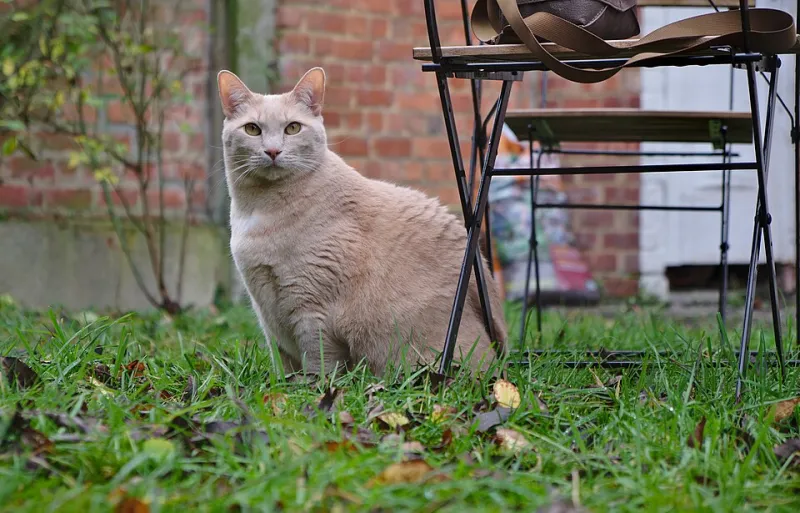
Photo: Trougnouf, CC BY 4.0, via Wikimedia Commons
There's a particular sound a cat makes when it has found something it shouldn't have. In our house it's a soft, self-satisfied clink — the noise of a glass dropper being nudged along the worktop at 6.40am, roughly eight hours after I left the bottle open beside the kettle.
Nothing happened. The cat was disappointed. But it was a useful nudge, because we talk about CBD so often in the language of soft evenings and slow Sundays that it's easy to forget what it actually is: a small bottle of concentrated plant extract living in a house full of creatures who lick things.
So this is the unglamorous side of CBD wellness — the walk-round. Five minutes once, and then a few habits that stop a mild worry turning into a bad afternoon.
Start with the boring question: where does the bottle live?
If the honest answer is 'wherever I last used it', that's job one. Bottles drift. They end up on the worktop, the arm of the sofa, the spare-room windowsill, and the bottom of a handbag next to a hair grip and a half-wrapped mint. All fine places to use CBD; all poor places to store it.
Pick one home. Somewhere cool, dark, dry and above the reach of anything with paws or sticky fingers. A high kitchen cupboard is fine. A lockable tin — the sort you'd have kept biscuits in during a diet — is better if toddlers visit, or if your dog has a talent for bin archaeology. The bathroom cabinet is the one spot to avoid: heat and steam are unkind to oils, and the label will thank you for keeping it out of there.
Pets: separating the risk from the drama
Let's be measured about this. CBD products sold legally in the UK must contain negligible THC, and most reputable oils are far weaker than the internet implies. A cat licking one dried drip off a glass pipette is very unlikely to be a crisis. But 'unlikely' isn't 'never', and the things surrounding the CBD often matter more than the CBD itself.
Carrier oils are the usual culprit. Most oils are suspended in MCT or hemp seed oil, both of which can give a dog or cat a loose tummy at surprisingly small volumes. Gummies are a step worse: some are sweetened with xylitol, which is genuinely dangerous to dogs even in tiny amounts, and a dropped gummy looks exactly like a treat. Capsules look like treats too. Balms smell like something worth investigating at length.
So: pets out of the room while you do your evening dropper. Caps on, not just resting on top. Gummies in a tin, never a bowl. And if you use a balm, wash your hands before the dog offers to help.
If a pet does get into it
Don't wait for symptoms before you pick up the phone, and don't try to make them sick unless a vet tells you to. Ring your vet or the out-of-hours service with the product in front of you: strength, bottle size, carrier oil, and your best guess at how much has gone. Vets work with estimates all day — be honest rather than precise.
Useful things to have to hand: the batch number, whether it's full spectrum, whether THC was listed at all, and your pet's weight. Symptoms worth mentioning on the call include wobbliness, vomiting, dribbling, drowsiness, or the opposite — restlessness and a racing heart. Cats and small dogs are generally more sensitive than big ones, but a phone call beats a guess every single time.
If a child gets into it
Children are quicker than you think and quieter than you'd like. If a small person has had a mouthful of oil, keep the bottle and the box, and ring NHS 111 or your GP surgery for advice. If they are drowsy, struggling to breathe, or you cannot rouse them properly, that is 999 — don't wait to see how it develops.
Try not to spend the following hour panic-Googling. Most results about CBD poisoning are written for American emergency departments and read like a horror film. The label in your hand plus one phone call gives you better information than forty open tabs.
The well-meaning guest problem
This happens more often than any pet incident. A friend stays over, uses your oil and leaves the cap balanced on top like a little hat. Or your mum 'tidies' it next to the gravy granules. Or someone at a dinner party asks for a drop and you spend twenty minutes wondering whether they meant two or eleven.
Two small fixes. Write the date you opened it on the bottle with a marker pen. And if a guest wants to try it, hand them the box with the dose printed on it and let them read it themselves. Nobody minds written instructions — it's how all of us learned.
The label check nobody does twice
Once a season, turn the bottle around and read the back. You're looking for strength in mg per ml (not the big number on the front), how many drops make up a dose, the batch number, the best-before date, and whether the product sits on the FSA's novel food register — a dull-sounding list, but a genuinely useful sanity check for anything sold as a food supplement.
If the label says nothing at all about THC, that isn't automatically a red flag, but it's worth an email to the seller. A company that will answer that question in writing is a company that knows its own supply chain.
The calm version of the plan
One home for the bottle. Cap on every time, even mid-routine. Pets and children out of the room while you dose. The box kept rather than binned. Your vet's number saved, NHS 111 in your phone, and a quiet house rule that if something goes wrong you ring a professional before you ring the internet.
That's the whole audit. It takes less time than finding the cat.