The Radiator, the Hot Flush and the Bottle on the Windowsill: CBD and Perimenopause, Minus the Miracles
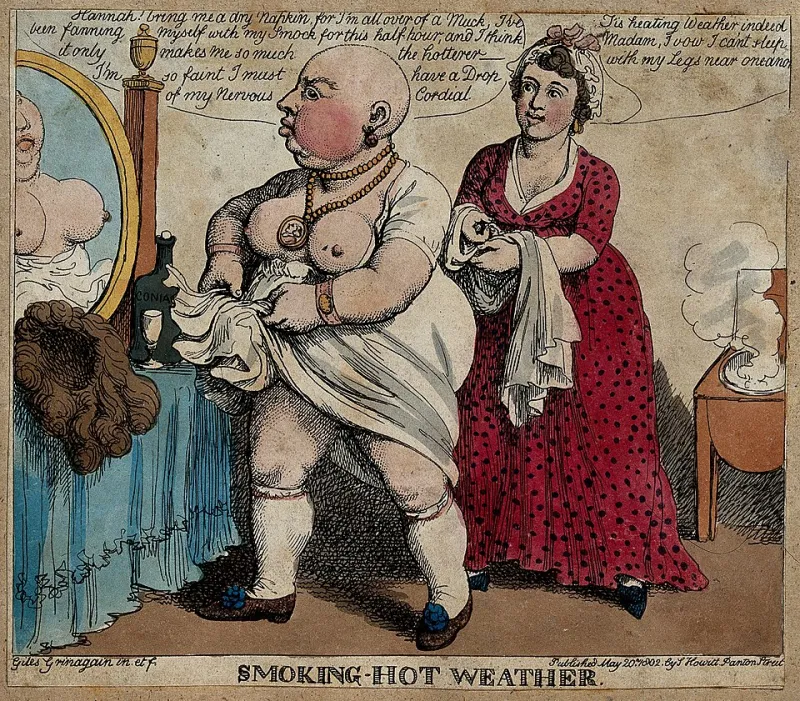
Photo: Unknown, CC BY 4.0, via Wikimedia Commons
It's 2pm in an office where nobody controls the heating. The radiator is doing its best impression of a sauna, my cardigan has been on and off four times since lunch, and I am fanning myself with a printed agenda like a woman in a period drama. Somewhere in the building, a woman ten years older is doing exactly the same thing and neither of us is mentioning it.
Then an advert appears on my phone: a woman in linen, a field, a small amber bottle, the words 'perimenopause support'. And I think — as I suspect you do — yes, but what does that actually mean?
So let's do the version nobody pays for. No linen, no field, no promises.
First, plain English
Perimenopause is the stretch of years before your periods stop, when oestrogen and progesterone swing around and then gradually decline. In the UK, menopause — the point twelve months after your last period — happens at around 51 on average, but symptoms often start in the early-to-mid forties, and sometimes earlier. It can last four years. It can last ten.
The usual cast list includes hot flushes, night sweats, broken sleep, anxiety, low mood, brain fog, aching joints, palpitations, changing periods and vaginal dryness. Not everyone gets the lot. Some women sail through and we should probably stop treating that as a personal insult.
The honest bit about CBD
Here's where we part company with the marketing. CBD is not a licensed medicine in the UK. It's sold as a food supplement or a cosmetic, it's not approved to treat any condition, and the research base is small — mostly studies on anxiety and sleep in other contexts, with wildly different doses and products. That doesn't make it rubbish. It does mean anyone claiming it 'balances your hormones' is selling you something they can't back up.
CBD will not replace oestrogen. It won't stop a flush once it has started. It won't protect your bones, sort out vaginal dryness, or stand in for HRT if HRT is what you need. Please be sceptical of anyone who implies otherwise, especially if the bottle costs more than your gas bill.
Where it might honestly fit
There are three moments in my week where I can see a fair case for it.
The first is 10pm, wired but exhausted, lying on top of the duvet with my brain doing a full audit of everything I've ever said wrong. The second is the 3am wake-up, when you're suddenly and completely awake for no reason at all. The third is what I think of as Sunday dread — that low hum of unspecified worry that arrives before the week does.
In each case, what I'm after isn't a chemical switch. It's ten minutes of not being braced. And there's a reasonable argument that a small, regular dose, taken as part of a routine you actually repeat, might help with that. The routine may well be doing most of the work. That's fine. It still works.
Timing matters more than strength
Most people feel an oil somewhere between 60 and 90 minutes after taking it, and a meal slows that down. So if sleep is the target, take it earlier in the evening — not at the point of despair, with the light already off. If daytime tension is the target, try a smaller dose after breakfast rather than in the middle of a difficult meeting.
Give it a fortnight at the same time each day before you form a view, and note how you slept and how the flushes went. Two lines in your phone's notes app is enough. You are looking for a pattern, not a revelation.
Dosage without the nonsense
Ignore the front of the bottle. The number printed there is often the total milligrams in the bottle, not the strength you're taking. The back will tell you mg per ml. Since a dropper is usually about 20 drops to the millilitre, a 10mg/ml oil gives you roughly 0.5mg per drop — so a 10mg dose is about twenty drops, not two.
Start low. Five to ten milligrams in the evening is a sensible first fortnight. Full spectrum means trace THC and the other cannabinoids are still in there; broad spectrum means the THC has been taken out; isolate means it's CBD alone. None of those is automatically better. A bottle claiming 3000mg in 30ml is very strong and probably not your starting point.
Check the medicine cupboard too
CBD affects the liver enzymes that break down various medicines, so it can change how much of another drug ends up in your system. That's worth a conversation if you take warfarin, epilepsy medication, thyroid tablets, or certain antidepressants. It's also worth mentioning HRT, even though there's no well-documented major interaction — your pharmacist would rather answer the question than not.
And please don't stop a prescribed medicine to 'give CBD a fair go'. That's not a fair test of anything.
The GP conversation
Book a longer slot if you can, take a two-week symptom diary, and ask directly about HRT — it is the treatment with the strongest evidence for flushes and night sweats, and you're allowed to want it. Mention the CBD in one plain sentence: 'I've been trying a CBD oil as a supplement alongside everything else.' If you meet a raised eyebrow, you're allowed to say it's your decision and ask only about interactions.
If it isn't helping, say so
Three to four weeks, not three days. Then be honest: is the day more manageable, or are you £45 lighter and still fanning yourself with an agenda? If it's the second, stop. Put the money towards a fan, a decent pillow, or a conversation with someone who can actually prescribe.
The radiator will still be there in February. But at least you'll know what you're dealing with.