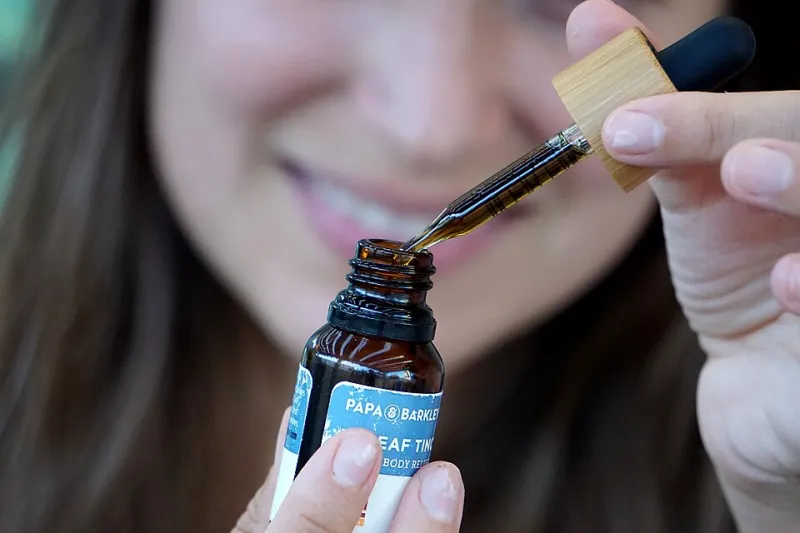
Two Months, One Notebook, and a Very Unbothered CBD Bottle

Photo by Photo by Vitaly Gariev on Unsplash on Unsplash
I went into this expecting to feel a bit silly. A paper diary taped inside the kitchen cupboard, with columns for my cycle, my sleep and my CBD, sounded like something a wellness influencer might do between a cold plunge and a sponsored smoothie. But I'd had three months of patchy sleep and a nagging suspicion that my evening oil was doing either everything or nothing, depending on the day. So I gave it two months. Not to prove a point — just to note things down.
Why I gave the calendar a go
The idea isn't complicated: your cycle changes how you feel, and maybe it changes how CBD fits around those feelings. I want to be clear about what this isn't. It isn't a hormone treatment, a replacement for medical advice, or a secret code that unlocks your best self. CBD isn't a painkiller and it won't regulate anything. What I wanted to know was simpler: did my routine feel different at different points in the month? And if so, was that worth acting on?
I'm not a clinician. I'm a woman with a notebook, a 10% oil and a habit of overthinking. That's the whole qualification.
The notebook that beat the apps
I tried an app first. I lasted four days. The notifications felt like homework and the graphs made me feel like I was failing a test I hadn't revised for. An A5 notebook from the stationery shop, £3.50, no streak to break. That worked.
Each page had a week. Down the side: the date. Across the top: cycle day, sleep, mood, cramps, dose, time taken, and one wildcard column called 'anything else'. That last one turned out to be the most useful.
The rule was simple: write it down at the same time each night, before I got into bed. No catching up three days later from memory. Memory is a liar with a good intentions problem.
The four things that earned their keep
Sleep. Not a score out of ten — just hours, roughly, and whether I woke up in the night. 'Woke at 3, brain online, read for 20 minutes' tells you more than 'sleep: bad'.
Mood. One word. Not a number, not a colour-coded chart. 'Frayed', 'flat', 'fine', 'bouncy'. It's easier to be honest with a word than a rating.
Cramps. Zero to three. Zero for nothing, one for a background ache, two for needing a hot water bottle, three for cancelling plans. That's it. No essay.
Dose and time. Two drops, 8.40pm. Or none. The 'none' days mattered as much as the rest — they were my accidental control group.
Add the wildcard: 'big meeting', 'walked home in the rain', 'two glasses of wine', 'argued with sister'. Without context, a bad night looks like a CBD failure. With context, it usually looks like a Tuesday.
The fortnight where nothing changed
Here's the bit I nearly left out. For roughly two weeks in the middle — days 15 to 28, if you're counting — my notes were almost identical. Same dose, same time, same sleep, same mood. No pattern. No revelation. The diary just sat there, politely recording a woman having a fairly ordinary fortnight.
I'd been half-expecting some dramatic luteal-phase plot twist. Instead, I got a run of nights where the oil did what it usually does: not much, quietly. And honestly? That was the most useful thing I learned. Two months isn't long enough to find a reliable pattern, and a fortnight of nothing is still data. It stopped me from squinting at three bad days and calling it a trend.
What I learned to ignore
The temptation to diagnose. Around week three I started reading every twinge as a clue. 'Low mood on day 22 — is that the oil? The cycle? The fact I hadn't eaten lunch?' That's not noting, that's fortune-telling with a pen.
I also ignored the internet's phase charts. The ones that tell you to take this at that point in your cycle, as if bodies run on a train timetable. My body has never once run on time. Use the diary to notice your own rhythm, not to audition for someone else's.
And I ignored the urge to change my dose every four days. If you fiddle with the dial constantly, you're not running an experiment — you're just making soup.
If you fancy trying it
Keep it small. One notebook, one pen, five columns, two months. Write at the same time each night. Don't aim for perfect records; aim for honest ones. If you miss a day, draw a line through it and carry on. The line is data too.
Don't use it to self-diagnose. If your cramps are severe, your sleep is wrecked for weeks, or your cycle has changed suddenly, that's a GP conversation, not a CBD one. Take the notebook with you if it helps — it's surprisingly good at turning 'I feel awful sometimes' into something a doctor can work with.
Would I keep it up?
Yes, but differently. I'll keep the sleep and mood columns. I'll drop the cramps scale unless something changes. I'll keep the wildcard, because 'walked home in the rain' explained more bad nights than any supplement ever did. And I'll keep the fortnight where nothing happened, because it's a useful reminder: not every quiet stretch is a problem to solve.
CBD, for me, is a small evening ritual — a pause, a drop, a moment before bed. The diary didn't turn it into a science. It just made me pay attention. Two months of noting, no diagnosing. That feels about right.